A day above Trieste, in the village that gave the world its favorite sparkling wine
Somewhere right now, a cork is popping. In a London wine bar, on a New York rooftop, at a wedding in Sydney, someone is raising a glass of Prosecco. It’s the most popular sparkling wine in the world, poured by the hundreds of millions of bottles every year: the drink of brunches and birthdays, of spritz hour in Italian piazzas, and of ordinary Tuesday evenings that deserve a little sparkle.
Yet very few of those glasses are raised with a thought for where the name comes from. It isn’t a brand or a region on a marketing map. It’s a small stone village on the edge of the Karst plateau, high above the Gulf of Trieste. Its name is Prosecco and it’s still there, quietly looking out over the sea, surrounded by vines.
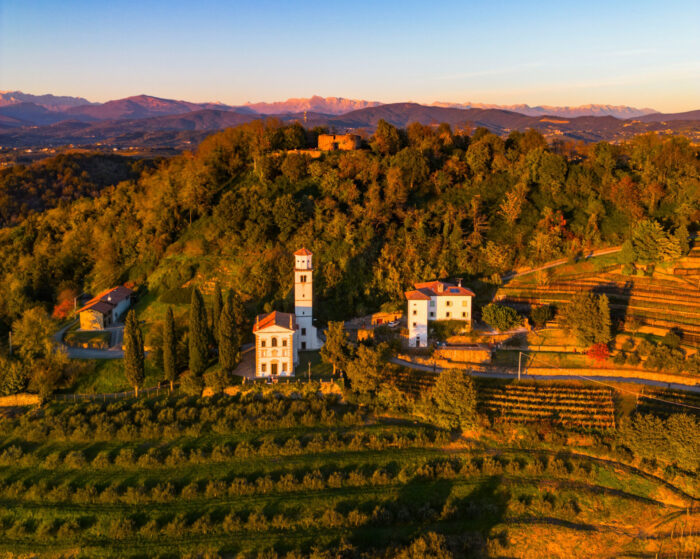
A Village With a Very Famous Name
The wines of this coast have been praised for a very long time. Roman writers spoke of Pucinum, a wine from the cliffs near here, and legend says Empress Livia credited it for her long life. By the end of the 1500s, an English traveler named Fynes Moryson was writing about a wine called “Prosecho” from this corner of the Adriatic.
In time, the grape left the village and found a new home in the rolling hills of the Veneto, where it became the sparkling wine the world now knows and loves. But the story came full circle. In 2009, when Italy protected the Prosecco name, the grape was renamed Glera, and the official Prosecco region was drawn all the way back to Trieste, bringing the little village that started it all home again.
Prosecco didn’t begin in a factory or a marketing office. It began here, on a windswept limestone ledge with a view most wineries can only dream of.

Where Our Roots Are
For our family, Prosecco isn’t just a name on a label. It’s where we come from. Our grandfather was born in this village, at a time when almost everyone in Prosecco was a fisherman, a quarryman or a winemaker. The sea below, the stone underfoot and the vines on the terraces were the whole world of this little village, and that tradition still shapes it today.
That’s why this tour feels different to us. We’re not showing guests a famous name. We’re bringing them home.
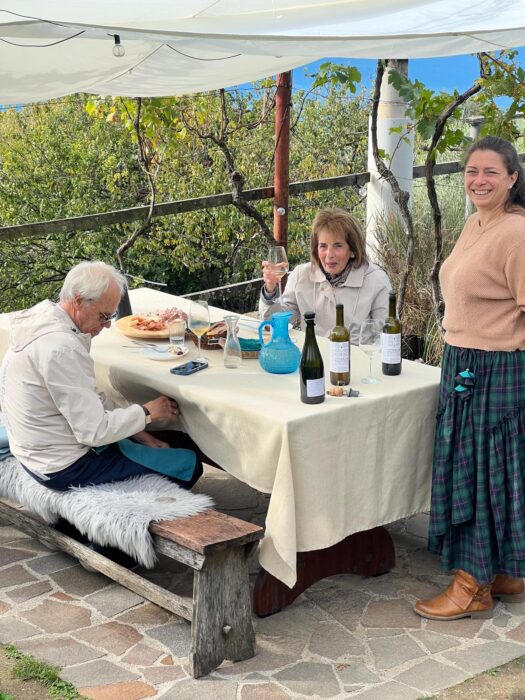
The Winemakers of the Karst
Winemaking up here has never been easy, and maybe that’s why it’s so honest. Vineyards cling to narrow terraces (pastini) held up by dry-stone walls, built stone by stone over generations. The soil is a thin layer of iron-red earth over pure limestone. The bora, the fierce cold wind the northern Adriatic is famous for, roars down from the plateau, and the sea breathes salt air back up the cliffs.
The producers are small, mostly family estates, and more often than not the person pouring your wine is the one who pruned the vines. Alongside Glera, you’ll taste the local heroes: Vitovska, a mineral white found almost nowhere else; Malvasia, aromatic and sunny; and, just across the border, Teran, a deep red born from that same red soil. These are wines that taste of stone and sea air. They don’t sparkle for attention. They tell you where they’re from.
The Ideal Day From Trieste
The beauty of this tour is how close it is. We pick you up at your hotel in Trieste, and twenty minutes of hairpin bends later, the busy port city is below you and you’re in another world.
We start with a walk along the Napoleonic Road (Strada Napoleonica), an old cliffside path carved along the edge of the plateau, with the whole Gulf of Trieste spread out beneath your feet. From there, we stroll into the village of Prosecco itself: narrow stone lanes, a church tower above the rooftops, and vines growing right up to the houses.
Next comes Contovello, where terraced vineyards tumble steeply toward the sea and the white walls of Miramare Castle glow on the water below. Then it’s time to sit down: a tasting at a small family winery or enoteca, with the people who make the wine and the stories behind every bottle.
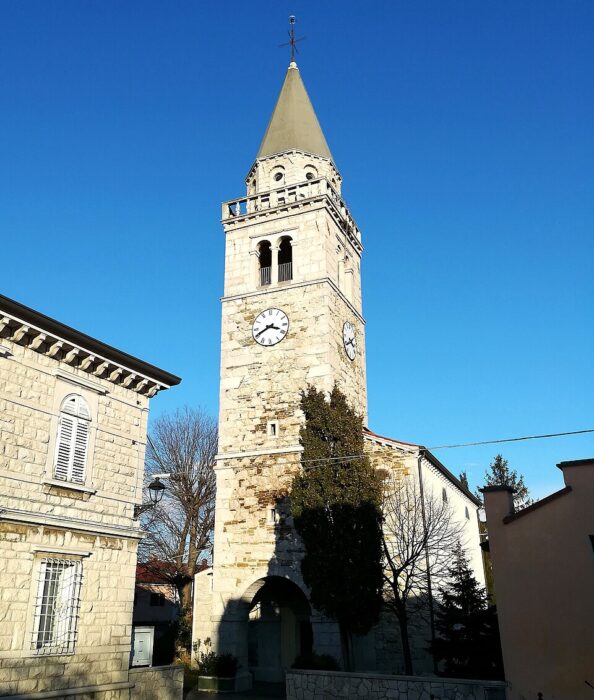
Because the border is only minutes away, we continue into the Slovenian Karst, where Teran and air-dried pršut (Karst ham) are a way of life. By late afternoon, after about six hours, you’re back in Trieste with a few bottles in your bag and the taste of the Karst still on your lips.
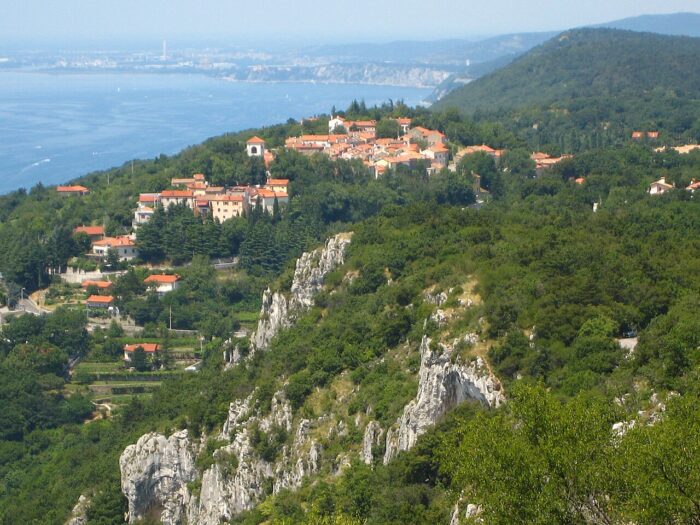
The Panorama: The Bay of Trieste
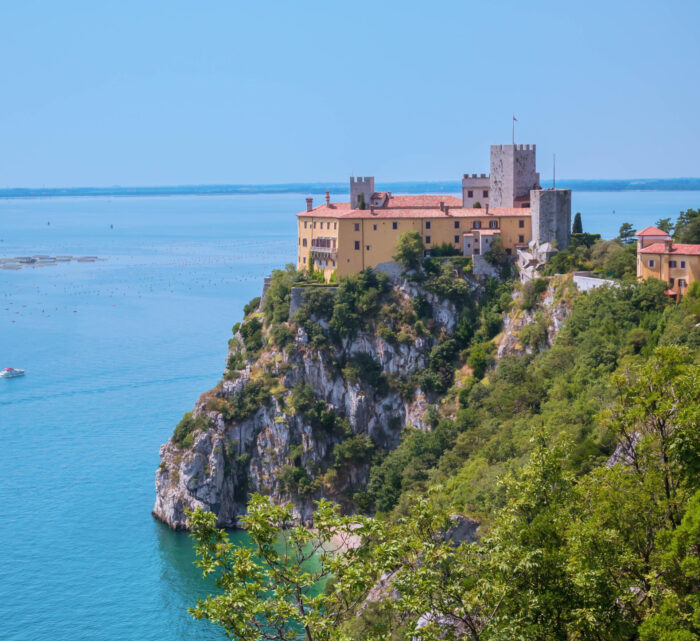
There’s a moment on this tour when everyone goes quiet. You come around a bend on the edge of the plateau, and suddenly there it is: the Bay of Trieste, glittering blue. The coastline curves west toward the lagoons of Grado and south toward Istria. And on many days, especially once the bora wind has swept the sky clean, the snowy peaks of the Alps sparkle on the horizon.
It’s the kind of view that makes you understand why people have been planting vines up here for two thousand years. Nobody wanted to leave.
The Local Experience: Follow the Branch
If you see a leafy branch, a frasca, hanging at a crossroads with a red arrow underneath, follow it. It means an osmiza is open.
The osmiza is a Karst tradition dating back to Habsburg times: for a few days a year, farming families open their courtyards and cellars to sell their own wine and homemade food directly to whoever wanders in. There’s no menu, no reservation and no fuss. Just wooden tables, local families, and whatever the house made this year. If an osmiza is open on the day of your tour, we’ll find it. It’s the most authentic taste of the Karst there is.
The Food
Food on the Karst is simple, local and generous. Paper-thin slices of prosciutto, cured by the bora wind. Karst cheeses, homemade salami, crusty bread and farm eggs. Olive oil from the coast below. In Trieste itself, a bowl of jota, the city’s hearty bean and sauerkraut soup, is the perfect end to a cool day.
None of it is complicated. All of it tastes exactly like the place it comes from.
The Aftertaste
Next time you raise a glass of Prosecco, whether at a celebration, a summer spritz or a quiet evening at home, remember the little village on the cliffs above Trieste. Remember the stone terraces, the red earth, the bora and the sea. That’s where the name was born, and for some of us, that’s where home is.
If you’d like to stand on those cliffs yourself, glass in hand, join our new Birthplace of Prosecco Tour (Italy & Slovenia, 6 hours, departing from your hotel in Trieste).
For more info contact: https://slovenia4seasons.com/